.avif)

.avif)
.avif)

.avif)
.avif)
.avif)
.avif)


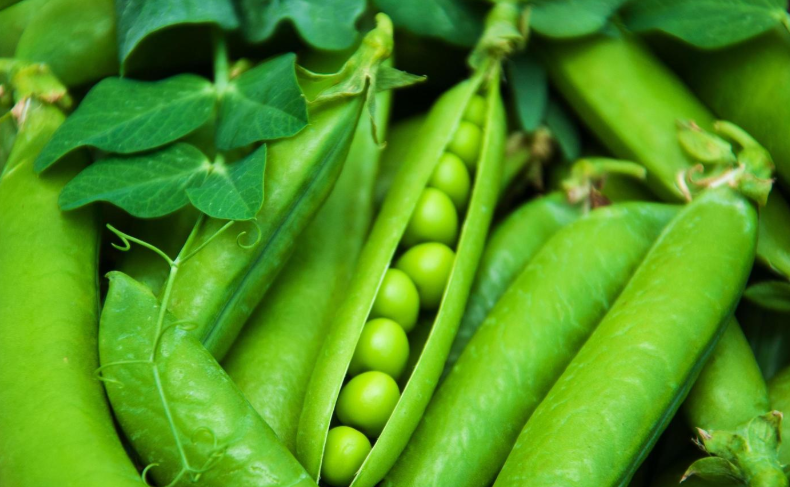
Peas are a versatile superfood, ideal for enjoying in a multitude of ways.
As a nutritional powerhouse, peas offer plant-based protein, fiber, antioxidants, vitamins (C, K, A, B-complex), and minerals (iron, magnesium, zinc). The nutrients enhance immunity, regulate blood sugar levels, promote healthy vision, and aid in the prevention of chronic diseases.
Beyond their health benefits, peas play an important role in diverse culinary traditions around the world, and are valued for both their nutritional density and culinary versatility.
Benefits
Antioxidant Protection: Peas contain flavonoids and carotenoids that combat inflammation and cell damage, reducing the risk of chronic diseases while strengthening the immune system.
Digestive and Metabolic Support: High in both soluble and insoluble fiber, peas aid in reducing cholesterol levels, preventing blood sugar spikes, and promoting a healthy digestive system.
Essential Nutrients: The vitamin and mineral content in peas supports immune function, vision health, bone strength, tissue repair, and sustained energy throughout the day.
In order for peas to maximize their advantages, it is essential to plant, water, and harvest at the appropriate times. Peas go through distinct growth phases that demand constant moisture, and center pivot irrigation provides accurate and even water delivery.
Water Management: The Foundation of Quality Production
Successful pea cultivation is achieved by using center pivot irrigation. The system ensures a steady water management strategy is maintained throughout the entire growing season. Efficient irrigation management provides benefits such as saving fresh water and energy, reducing nutrient leaching, increasing crop yield and grain quality, and maximizing return on investments. (MSU Extension, Irrigation, 2020).
Maintaining optimal soil moisture from germination through harvest ensures uniform pea size, shape, and color, which are qualities directly influencing market value and processor requirements. Center pivot irrigation systems excel at delivering this precision throughout the crop cycle.
Center Pivot Irrigation for Pea Production
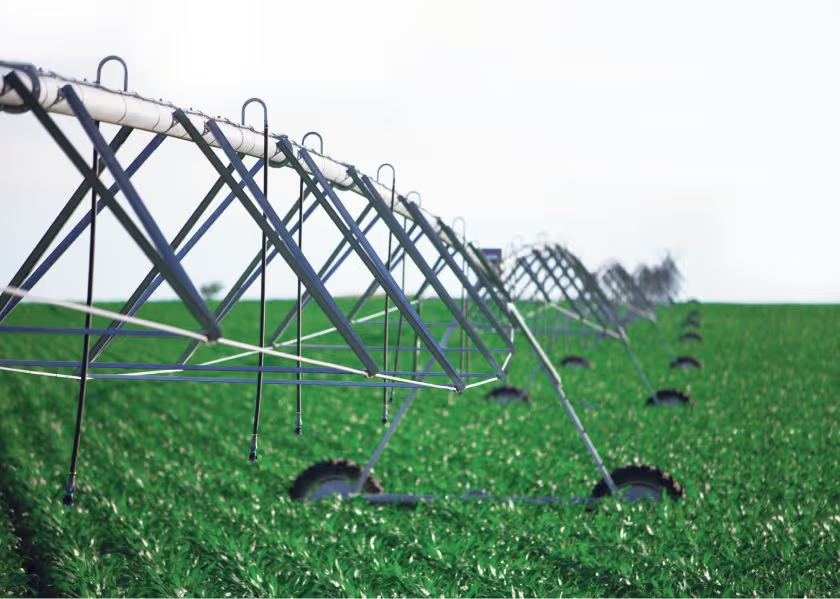
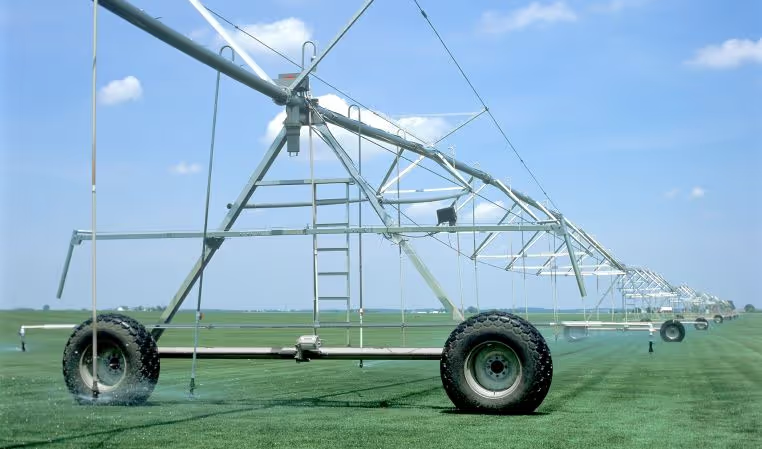
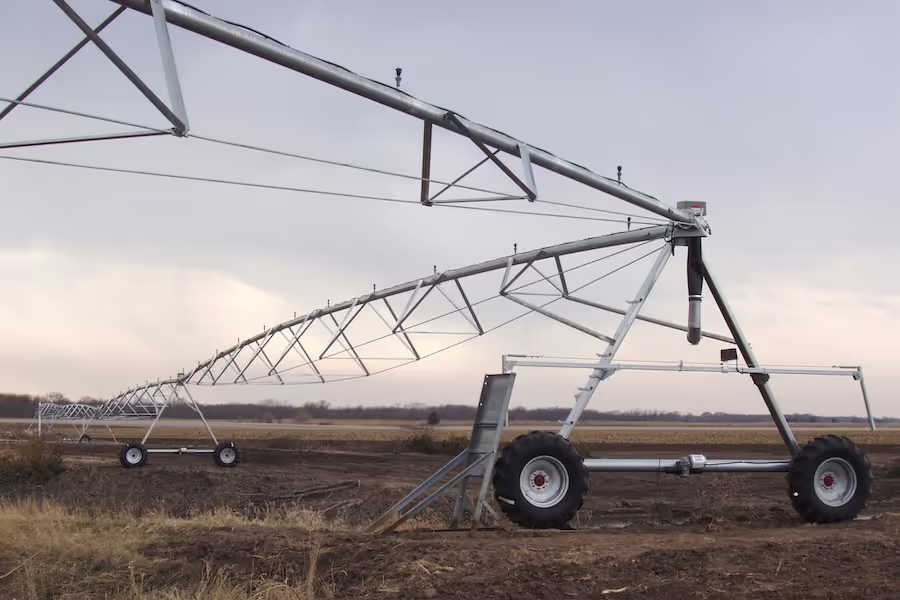
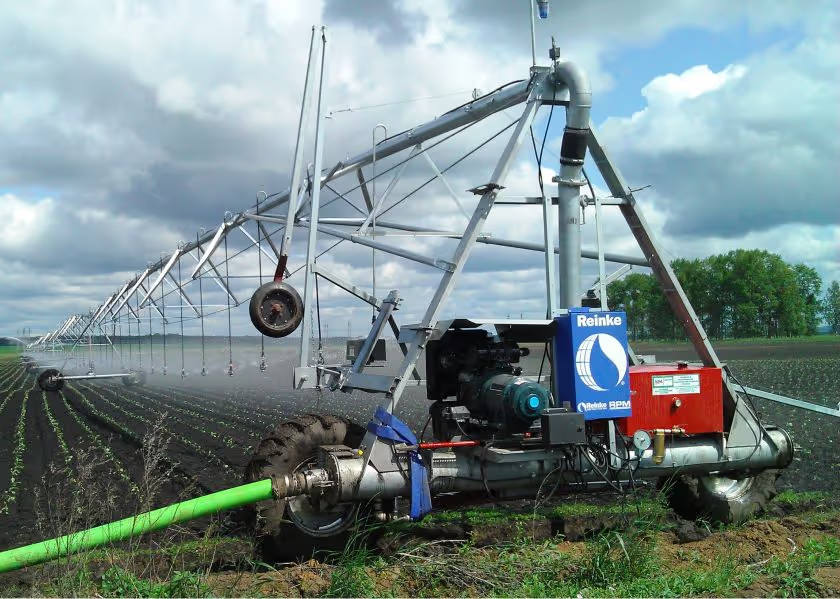
Commercial pea operations benefit greatly from center pivot irrigation. The irrigation system delivers uniform water distribution across the field, effectively targeting dry areas and adapting to various terrains. By automating operations, both labor requirements and energy costs are reduced, all while providing the consistency premium pea production demands.
At the forefront of water conservation efforts, center pivot irrigation systems enable growers to apply precise amounts of water based on actual crop needs, rather than following rigid schedules. The precision becomes especially valuable during the flowering stage, when peas are most sensitive to moisture variations. Precision irrigation is a process involving technology and specialized equipment to improve the efficiency and effectiveness of agriculture irrigation management. (Utah State University, 2023).
Integrating Smart Technology
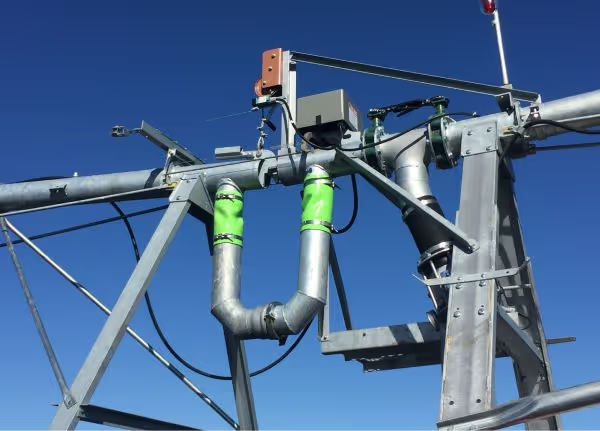
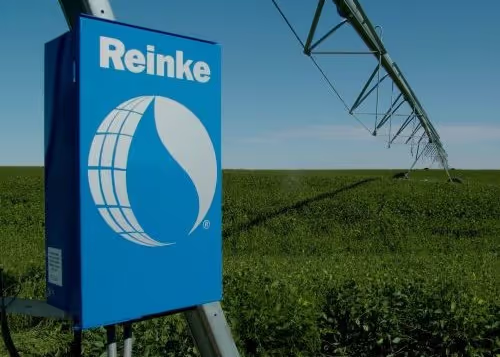
Reinke center pivot systems integrate seamlessly with advanced irrigation management tools, transforming how growers make watering decisions. Irrigation decision-making tools such as irrigation scheduling programs and soil moisture sensors are available to improve the irrigation water use efficiency. In addition, irrigation system design, maintenance, and operation can improve application efficiency. (MSU Extension, Irrigation, 2020).
Using any smart device, growers can monitor actual crop evapotranspiration (Eta),soil moisture levels, and localized weather conditions, while receiving real-time system status and alerts. Growers can make informed decisions based on current field conditions, rather than guesswork or fixed schedules. The ability to oversee multiple machines from a single interface allows for efficient management of larger operations, with each system monitored and controlled individually.
The integration of agronomic data and irrigation control enables growers to respond quickly to changing conditions, and to apply additional water during critical periods or adjust the schedules based on incoming weather.
Pea Varieties for Commercial Production
Utilizing a center pivot irrigation system for commercial production, ensures adequate moisture is delivered at the precise time throughout the growing cycle. When irrigation is incorporated as a vital component in the process, there is a substantial enhancement in pod development, pea size, and overall yield quality. Commercial production today is dominated by three main types of peas, which are cultivated in regions with differing levels of water availability.
Shelling Peas(English Peas/Garden Peas) are a major product grown in China, France, and the United Kingdom. The peas are harvested when the pods are robust and full, containing sweet and tender peas inside. Popular varieties include Little Marvel (early-maturing with plump, sweet peas), Wando (heat-tolerant for warmer climates), and Green Arrow(abundant yields of long, slender pods).
Snow Peas (SugarPeas/Mangetout) feature flat pods with immature seeds and are eaten whole. They are grown across the United States, Latin America, Asia and Europe areas. Picked very young and flat, they’re ideal for stir-fries. Key varieties include Mammoth Melting Sugar(large, flat pods), Oregon Sugar Pod II (highly productive with sweet flavor),and Dwarf Grey Sugar (compact plants with delicious edible pods).
Sugar Snap Peas represent a cross between shelling and snow peas, featuring thick, crunchy, sweet pods that are fully edible. This specific type of pea thrives in regions with temperate climates and high elevations found in warmer countries such as Mexico, California, Guatemala, and Kenya. Popular varieties like Sugar Snap and Sugar Daddy make excellent fresh snacks.
Other varieties include Split Peas (dried and split for soups), Marrowfat Peas (used for traditional mushy peas), and Pea Shoots (tender, edible greens). The peas are primarily grown in the Pacific Northwest and Northern Plains regions of the United States, along with Canada, Europe and Australia.
Peas grown in the Southern portion of the United States are known as Southern Peas and have diverse names such as Cowpeas, Field Peas, Black-Eyed Peas, Crowders, and Pinkeye-Purple Hulls. Cowpeas are drought resistant, but using center pivot irrigation can double or triple yields in periods of severe droughts. (OSU Extension, 2022).
Reinke center pivots are much like peas, and come with a range of specialties. Every system is unique, and tailored with custom features to accommodate the precise requirements of the grower. Reinke irrigation systems are constructed with high-quality material sand innovative engineering.
Partner with A Reinke Dealer
High-quality pea production requires precision irrigation management throughout the growing season. Reinke center pivot systems, when combined with smart irrigation technology, give growers the tools to optimize water delivery during the vital growth stages, from flowering to pod development.
Reinke dealers can recommend specific irrigation systems and technology configurations tailored to the fields and production goals. Reach out to a Reinke dealer to discover how the right irrigation system can boost the growth of premium peas that command top market prices.
References
Utah State University, Crop Resources, Extension (2023). Precision Irrigation Guide for Center Pivots. https://extension.usu.edu/crops/research/precision-irrigation-guide-for-center-pivots
OSU Extension(2022). Southern Pea Production. https://extension.okstate.edu/fact-sheets/southern-pea-production.html Oklahoma State University Extension.
MSU Extension(2020). Efficient Irrigation Management With Center Pivot Systems. https://www.canr.msu.edu/resources/efficient-irrigation-management-with-center-pivot-systems Michigan State University, MSU Extension, Irrigation.