.avif)

.avif)
.avif)

.avif)
.avif)
.avif)
.avif)


The Foundation of Effective Water Management
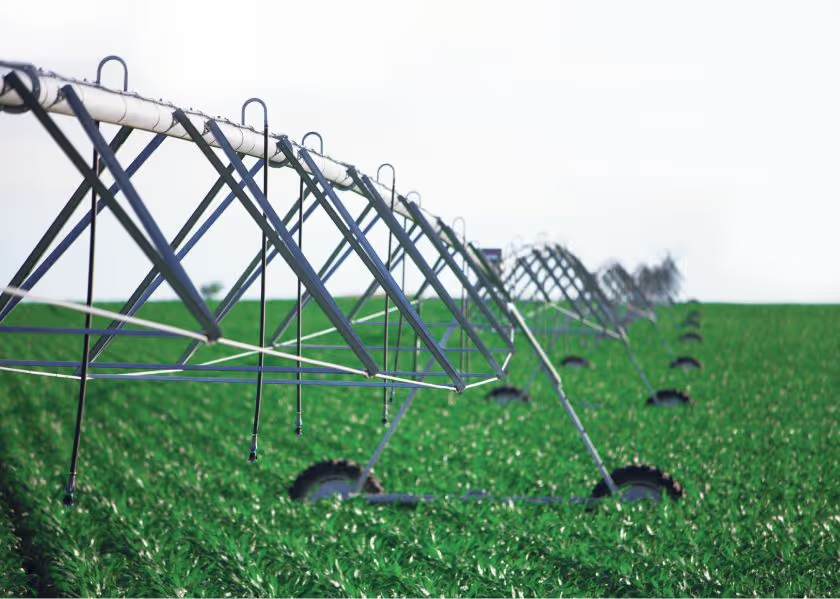
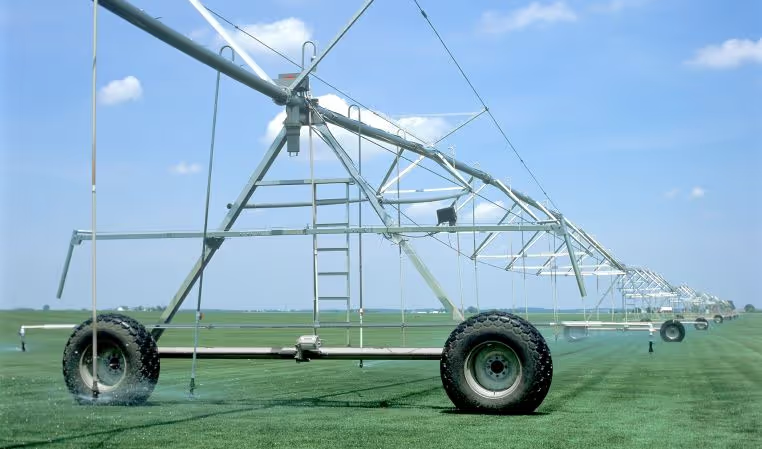
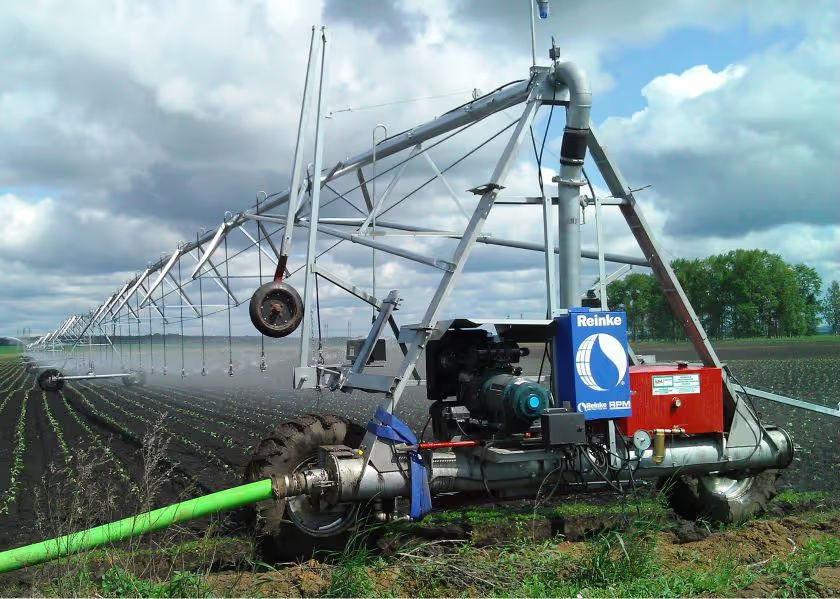
Effective water management begins with a fundamental understanding of crop needs and field conditions. Modern agriculture requires more than simply applying water to fields; it demands strategic decision-making based on accurate data and proven technologies. Center pivot systems provide the foundation for this approach by delivering uniform water distribution across fields, eliminating the inconsistencies that plague traditional irrigation methods.
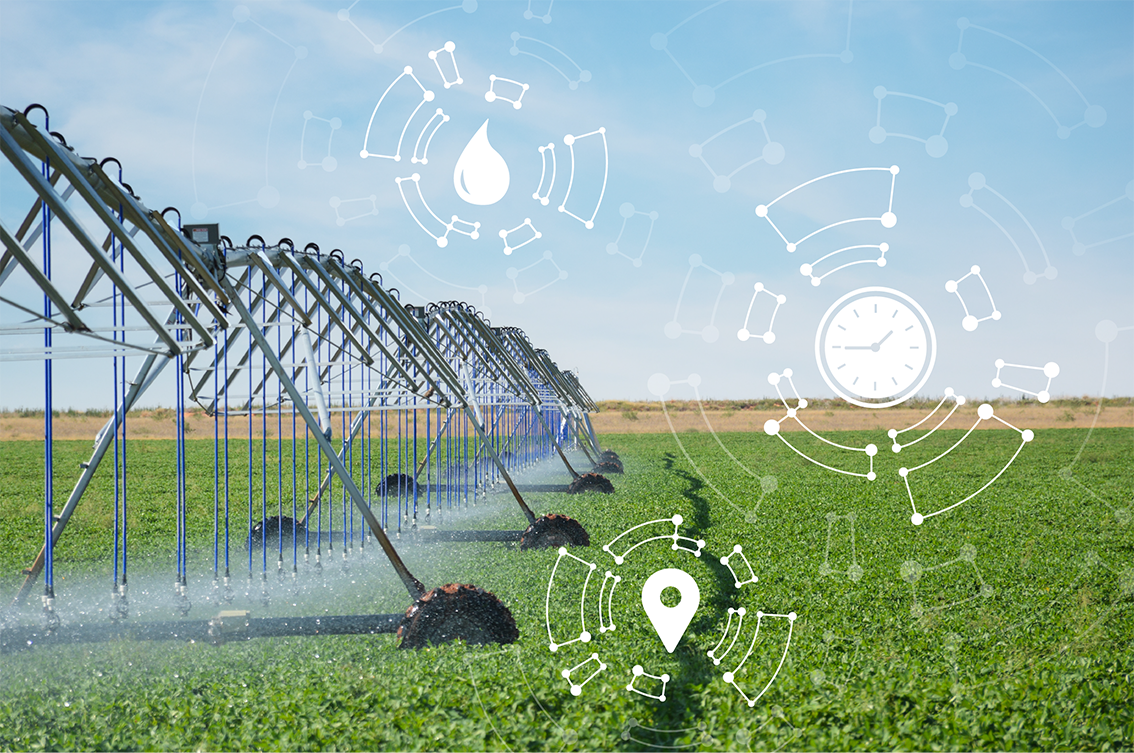
Precision irrigation takes this concept further by delivering the right amount of water at precisely the right time, matching application rates to actual crop requirements rather than estimated needs. This targeted approach minimizes waste while maximizing crop productivity. Technology enables data-driven decision-making that considers multiple variables, including soil conditions, weather patterns, crop growth stages, and water availability(O'Shaughnessy et al., 2019).
The implementation of precision irrigation technologies represents a significant advancement in agricultural water management. Research demonstrates that optimizing irrigation systems can reduce water waste by up to 25% while maintaining or improving crop yields (Aguilar, 2025). These improvements stem from better understanding of when and how much to irrigate, moving beyond fixed schedules to responsive management strategies that adapt to real-time conditions.
Irrigation Technology
Variable Rate Irrigation (VRI) technology represents a breakthrough in precision agriculture, allowing farmers to tailor irrigation applications to specific field variables rather than treating entire fields uniformly.
VRI systems account for these differences by dividing fields into management zones and applying water based on the unique characteristics of each zone. The technology considers soil types, topography, and diverse prescriptions to create customized irrigation plans that optimize water use across the entire field (Bayabil et al., 2025). This precision approach prevents over-irrigation in areas with high water-retention capacity while ensuring adequate moisture in areas that drain more quickly.
The benefits of VRI extend beyond water conservation. By matching water application to specific field conditions, farmers can improve crop uniformity, reduce nutrient leaching, and minimize environmental impacts associated with excess irrigation. Research indicates that VRI enhances water use efficiency by enabling site-specific management that responds to within-field variability(O'Shaughnessy et al., 2019).
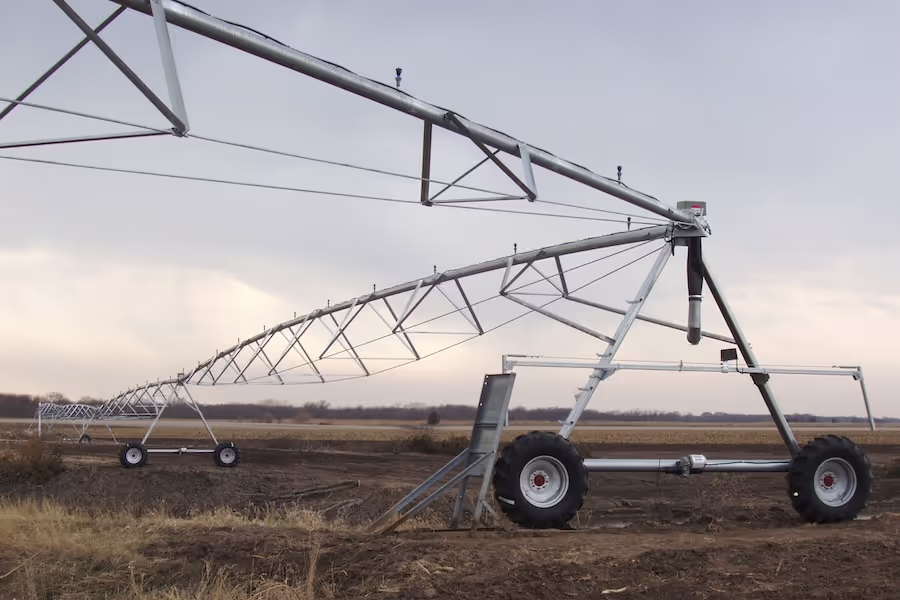
Field geometry presents another challenge that modern irrigation technology addresses effectively. The Electronic Swing Arm Corner (ESAC™) system provides solutions for oddly shaped fields and corner irrigation, ensuring complete coverage without waste. This technology allows center pivots to irrigate previously unreachable areas, maximizing productive acreage while maintaining water efficiency (Arens, 2023). The ESAC system demonstrates how innovation continues to expand the capabilities of center pivot irrigation, making precision water management accessible across diverse field configurations.
E3™ Precision Irrigation System
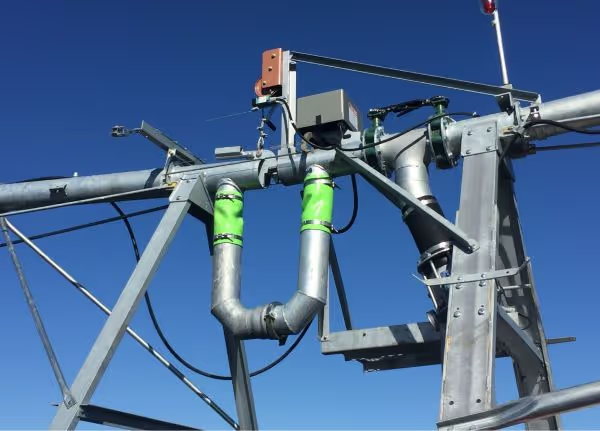
The E3™ precision irrigation system exemplifies the integration of engineering excellence with practical water management solutions. This advanced platform delivers precise water application through uniform coupler spacing, ensuring that application rates remain consistent from the first coupler to the last. This consistency is crucial for achieving the uniform water distribution that modern agriculture demands.
The E3 system offers flexible coupler spacing configurations, including options for placement over tower tops, providing farmers with customization opportunities that match their specific field conditions and crop requirements. End booms incorporate enhanced flexibility in coverage lengths and allow for customizable height adjustment, enabling precise irrigation even in challenging field sections. These features combine to create a versatile irrigation platform that adapts to diverse agricultural settings while maintaining exceptional water application uniformity.
Irrigation water management through advanced systems like the E3 is used to manage soil moisture levels that promote optimal plant growth. The precision and consistency of modern irrigation technology make a measurable difference in agricultural operations. Advanced irrigation technologies demonstrate clear advantages in water conservation, energy efficiency, and crop productivity(Nebraska Corn Board, 2025). These improvements translate directly to enhanced farm profitability and sustainability.
Efficient irrigation management provides multiple benefits that extend throughout the growing season. Proper irrigation scheduling and uniform water application reduce water waste, lower energy costs, minimize nutrient leaching, and create ideal growing conditions that support maximum crop potential. The integration of precision technology with proven irrigation infrastructure creates a management system that responds to crop needs while conserving valuable water resources (Dong et al., 2020).
Federal conservation standards recognize the critical role of irrigation water management in agricultural sustainability. The USDA Natural Resources Conservation Service establishes guidelines for irrigation water management practices that improve application efficiency, reduce water losses, and protect water quality (U.S. Department of Agriculture Natural Resources Conservation Service, 2020). These standards support the adoption of technologies and practices that enhance water use efficiency across diverse agricultural landscapes. Reinke’s E3 surpasses national standards on average by 13%, according to field studies (Beam, 2025).
Conclusion
Precision and efficiency have become essential elements in agricultural irrigation as water resources face increasing pressure from multiple sectors. Technology plays an increasingly important role in managing and distributing water resources effectively, enabling growers to produce abundant crops while demonstrating responsible stewardship of shared water supplies.
Achieving effective water management requires working smarter instead of harder. By adopting proven center pivot technology with precision irrigation capabilities, farmers gain the tools necessary to optimize water use, improve crop productivity, and build sustainable operations that thrive amid changing conditions and increasing resource constraints. The future of agriculture depends on innovations that make every drop count.
References
Aguilar, J. (2025). Maximizing irrigation efficiency: Key steps for farmers in 2025. Kansas State University Research and Extension.https://www.ksre.k-state.edu/news-and-publications/news/stories/2025/03/agriculture-maximizing-irrigation-efficiency.html
Arens, C. (2023). Electronic Swing Arm Corner covers field. NebraskaFarmer.https://www.farmprogress.com/farming-equipment/electronic-swing-arm-corner-covers-field
Bayabil, H. K., Topa, D., Rezaei, M., Agehara, S., Brinkhoff, J., & Zotarelli, L. (2025). Implementation of variable-rate irrigation using center-pivot systems for improved water management. Agronomy Journal, 117(1),116-130. https://doi.org/10.1002/agj2.21750
Dong, Y., Kelley, L., & Miller, S. A. (2020). Efficient irrigation management with center pivot systems (E3407). Michigan State UniversityExtension.https://www.canr.msu.edu/resources/efficient-irrigation-management-with-center-pivot-systems
Nebraska Corn Board. (2025). Corn irrigation: Providing responsible, sustainable growth for Nebraska crops. In The future of irrigation: Continued technological development.https://nebraskacorn.gov/cornstalk/research/irrigation-systems-in-nebraska/
O'Shaughnessy, S. A., Evett, S. R., & Colaizzi, P. D. (2019). Precision agricultural technologies for irrigation water management. In Precision agriculture basics (pp. 113-132). American Society of Agronomy, Crop Science Society of America, and Soil Science Society of America.https://doi.org/10.2134/precisionagbasics.2016.0089
U.S. Department of Agriculture Natural Resources Conservation Service. (2020). Irrigation water management (Conservation Practice Standard 449). https://www.nrcs.usda.gov/resources/guides-and-instructions/irrigation-water-management-ac-449-conservation-practice-standard
Beam, J., Reinke, R., (2025). Center Pivot Irrigation System Increasing Efficiency Through Optimum Uniformity Of Application, Reinke Manufacturing Co., Inc. https://reinke.com/handouts/center-pivot-irrigation-system-increasing-efficiency