








AgrAbility Helps Producers Keep Working Through Life’s Challenges
Agriculture demands a lot from the people who do it. Long days, physically demanding tasks, heavy equipment, livestock and unpredictable weather make farming and ranching challenging and sometimes dangerous. An injury, disability or health condition can make those demands even harder to manage.
But a health or mobility challenge doesn’t necessarily mean stepping away from the farm.
For farmers, ranchers and agricultural workers who want to continue working, AgrAbility can help identify ways to make everyday tasks safer, more manageable and more accessible. Through education, technical assistance and connections to resources, the program helps people in agriculture explore options that can support their continued involvement in farming and rural life.
Finding a Way to Keep Farming
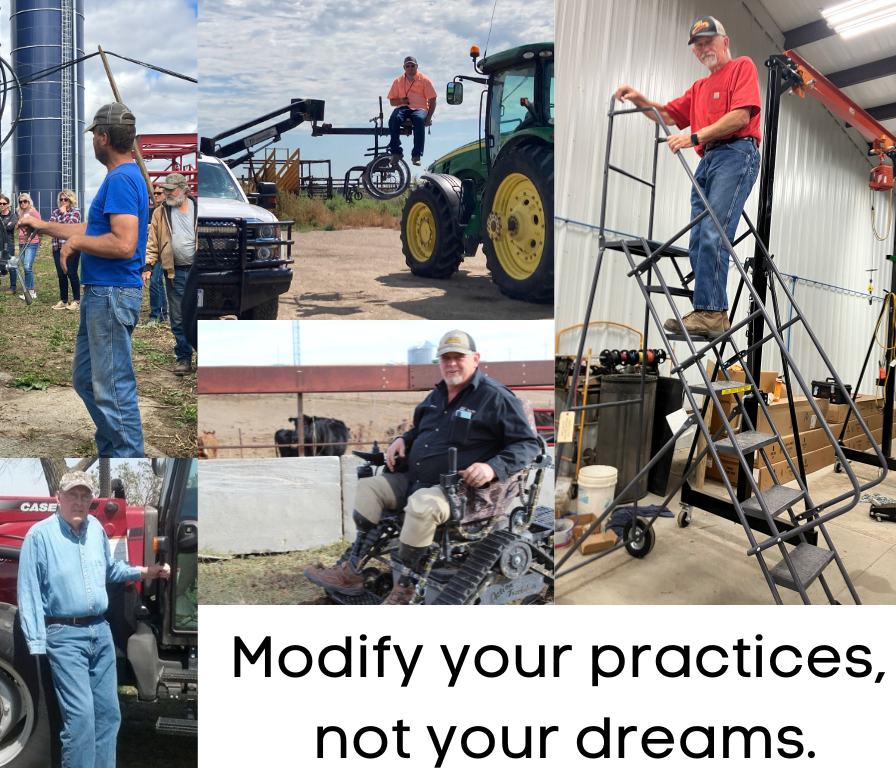
A disability or health condition can affect nearly any part of an agricultural operation. Climbing into equipment, reaching controls, working with livestock, walking across uneven ground or completing repetitive tasks may become more difficult after an injury or as a chronic health condition changes over time.
“AgrAbility's purpose is to work with farmers and ranchers that have an injury, an illness or a disability affecting the way that they do typical tasks on the farm,” said Emily Jacobson, program manager for Nebraska AgrAbility. “Our job is to come out and make an assessment, then recommend tools, devices and farm site modifications. Then I'll help find them funding for the assistive technology they might need to remain involved in agriculture.”
The right solution depends on the individual, the condition or limitation, the work that needs to be done and the operation itself. Sometimes a relatively simple change can make a meaningful difference.
“I like to say we’re basically potentially preventing another injury from happening for that individual with the recommendations we can make after we see their operation,” Jacobson said.
What Can AgrAbility Do for You?
Depending on the services available through a state or regional project, assistance may include:
- Identifying challenges: Looking at the agricultral tasks or environments that have become difficult because of an injury, disability or health condition.
- Exploring assistive technology: Providing information about tools, equipment, devices and other approaches that may help someone perform essential tasks.
- Considering farm-site modifications: Exploring changes to equipment, buildings, work areas or the home environment that may improve accessibility.
- Providing technical assistance: Helping farmers and ranchers better understand potential solutions and how they may apply to their operation.
- Connecting people with resources: Helping identify appropriate organizations, services or potential funding sources for specific needs.
- Supporting safer work practices: Providing information to help individuals recognize activities and circumstances that may increase the risk of injury.
A National Network of Support
AgrAbility is supported by the U.S. Department of Agriculture (USDA) through a competitive grant process. The National AgrAbility Project and state or regional projects work through partnerships involving land-grant universities and nonprofit disability services organizations. In Nebraska, the University of Nebraska-Lincoln and Easterseals Nebraska have partnered to support the program.
Because services and eligibility can vary by location, farmers and ranchers should begin by finding out what support is available where they live.
Taking the First Step
If an injury, disability or health condition is making it harder to work on the farm, you don’t have to figure out every solution on your own.
“Your first step is to reach out to us and tell us what’s going on,” Jacobson said. “There’s no cost for us to assess what you might need. I know it’s hard for farmers to ask for help, but if you are willing to accept some help – we want to see you succeed.”
AgrAbility can help you explore options, identify resources and consider changes that may allow you to remain involved in the work you care about. Reaching out is a way to learn what may be possible—whether you’re recovering from an injury, managing a long-term condition or looking ahead to how your needs may change.
To learn more about the National AgrAbility Project and find one of the 22 state or regional programs, visit AgrAbility.org.