.avif)

.avif)
.avif)

.avif)
.avif)
.avif)
.avif)


Choosing an irrigation method is one of the most important decisions and investments you will make for your operation. The method you select affects water efficiency, labor demands, crop yields, and your return on investment.
Flexibility matters too. Your irrigation system has a direct bearing on which crops you can grow and how much water you’ll use along the way. You want a method built for long-term value, not just this season’s crop.
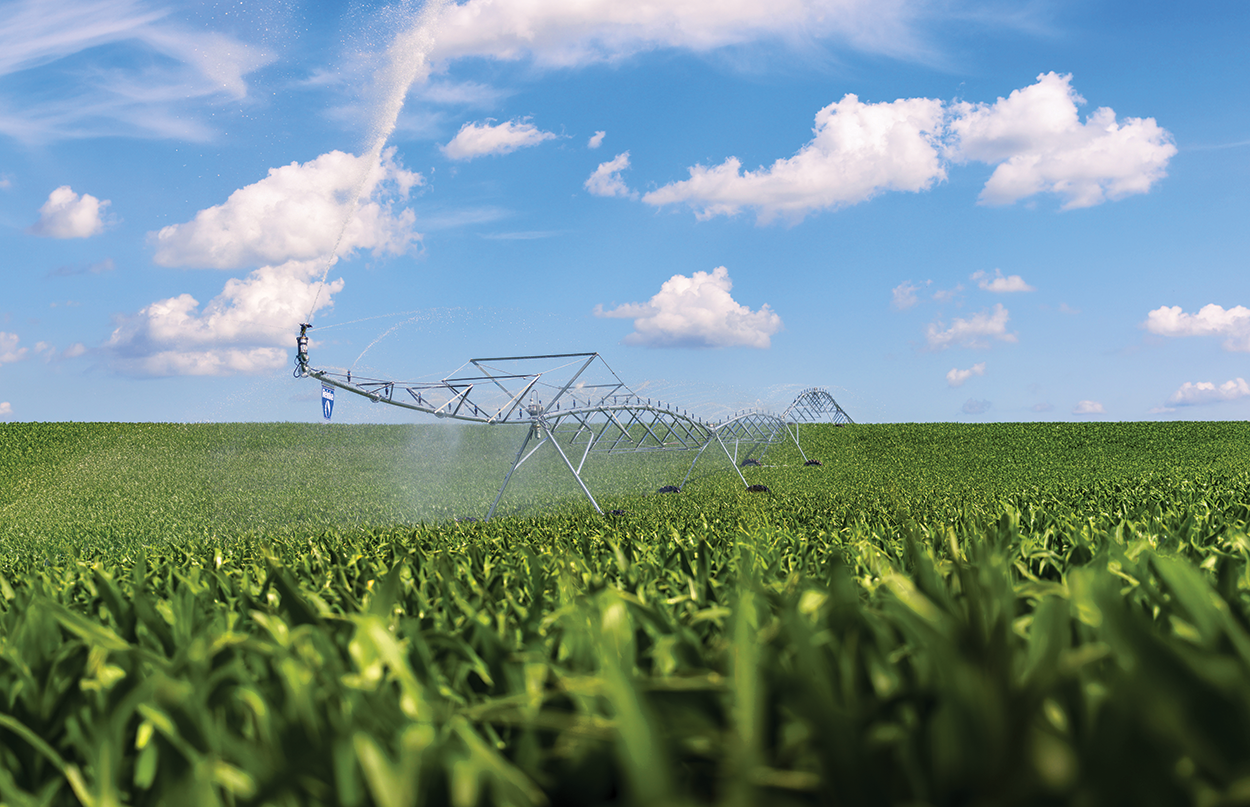
Let’s take a closer look at the different methods of irrigation and discover why a Reinke center pivot irrigation system is an advantage for your operation.
Drip Irrigation: Pricey to Start, Limited Flexibility
Drip and subsurface drip irrigation come with a higher investment cost per acre than center pivots. Installing rates average from $500 to $1200or more per acre for a basic installation because they require specialized, precise engineering rather than standard, open hosing.
Driplines are also limited to a maximum length of 2,640 feet, so larger fields require additional mainlines—and that adds even more cost.
Once the driplines go in the ground, you are locked in. Depth, spacing, emitter size, and diameter cannot be changed, which limits the crops you can grow and the tillage practices you can use down the road.
Ongoing chemical maintenance is required, such as acid flushing, chlorine, and herbicide injections. Due to chemical maintenance, using driplines may not be compatible with organic farming operations.
Driplines are vulnerable to rodent damage from gophers and field mice. They can chew on the lines resulting in leaks that are difficult to locate and repair.
Your field’s terrain can also be a limiting factor for the use of driplines. Sharp rocks can complicate surface installations by puncturing tubing, and uneven or shallow dirt makes consistent water distribution, line burial, and digging incredibly difficult.
Flood Irrigation: Labor-Intensive, Tricky to Manage
The least efficient type of irrigation is flood and furrow irrigation – and they bring their own set of headaches. Fields need to be perfectly level, and furrows must be dug before every season, which is a labor-intensive process that is never-ending, time-consuming, and a money-draining chore year after year.
Even a slight hill or change in terrain can keep water from reaching the far end of the field, causing pooling in some spots and dry patches in others. Fields also need to be rectangular and not too large, or water will not disperse evenly.
Flood irrigation also has a natural tendency toward overwatering. Excess water pooling at the end of the field can carry chemicals into the groundwater.
Soil types also play a major role in determining furrow length and what you can plant in your field. For instance, coarse, high-infiltration soils make it harder to get a uniform distribution.
Your overall yields with those types of irrigation would suffer, making them a poor choice for your operation.
Working With You: Reinke Center Pivot Irrigation
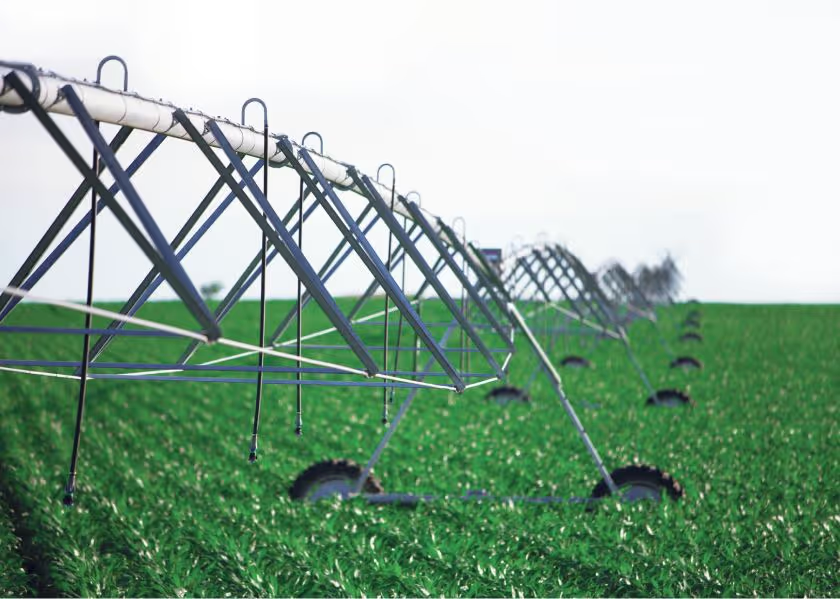
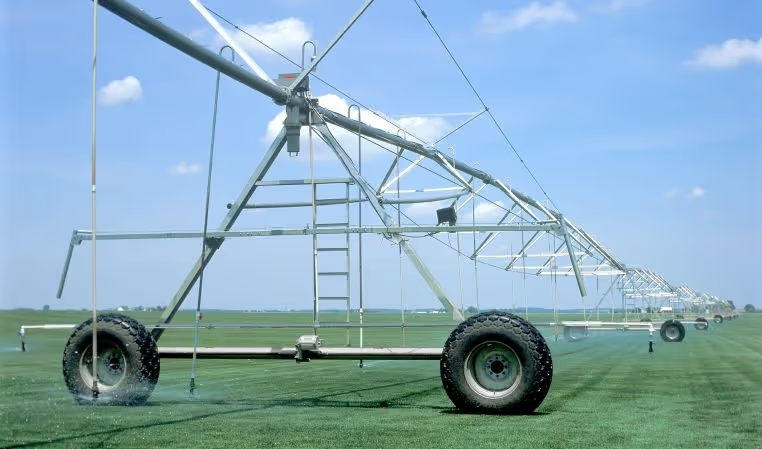
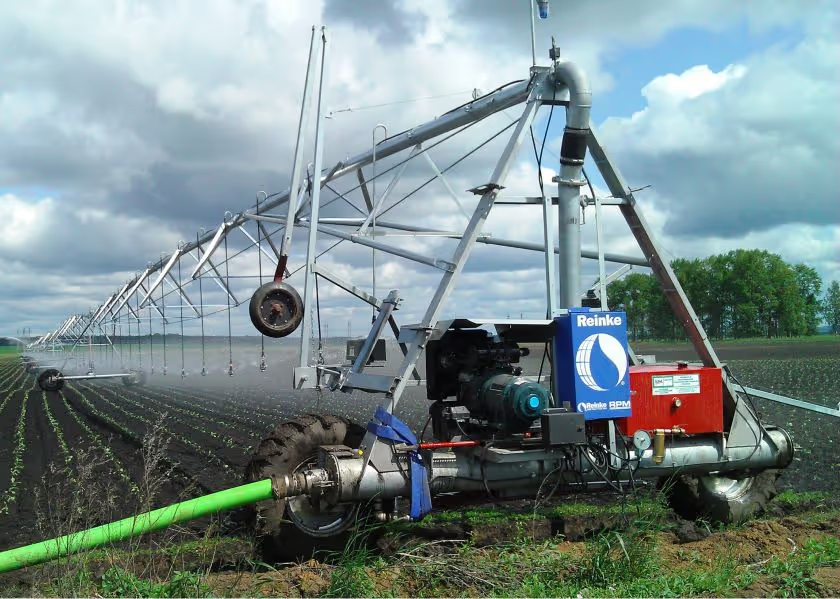
There is an irrigation method that is less labor-intensive, delivers more uniform water distribution and is flexible to your operation—look no further than Reinke.
The per-acre installation cost of a Reinke center pivot is less than half of a drip system. Center pivots are also more efficient and far less labor-intensive than flood irrigation, which keeps your operational costs down over the lifetime of the system.
- Reinke’s proven durability and reliability - The longer your system lasts, the greater your return on the initial investment, and the more value you get out of it overtime.
- Easy upgrades - Basic pivot packages can be upgraded as your needs evolve, so your system keeps meeting your operational demands today, tomorrow and well into the future.
Reinke center pivots go beyond simple uniformity. They deliver consistent water distribution from the first row to the last, regardless of where a crop sits in the field. With fully customizable sprinkler packages, you get precise water application tailored to your specific field conditions and crop types, with control over variables like sprinkler plates, operating pressures, mounting heights, and sprinkler spacing.
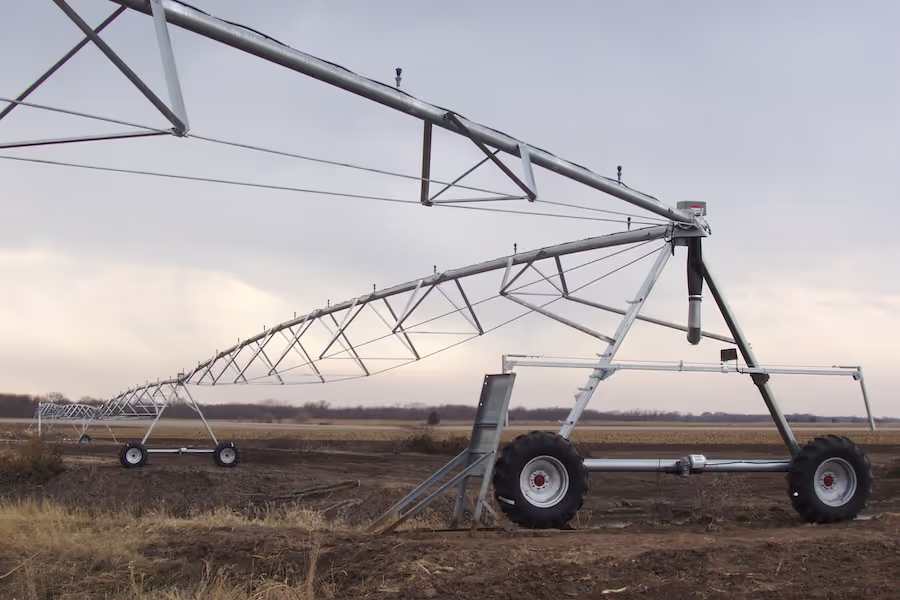
- Made to fit your operation: Reinke systems are designed to fit nearly any field size, shape or terrain - unlike flood irrigation, no field leveling is required.
- Built to adapt: Center pivot irrigation allows you to make adjustments Sprinkler packages can be swapped out after installation without replacing the entire system, so you can adjust to new crops or practices without starting from scratch.
That kind of flexibility stands in sharp contrast to drip systems, where the design decisions you make at installation are permanent for the life of the system.
Long-Term Value
Reinke center pivot irrigation systems are the best solution for you. From addressing challenges where others may fail to effectively applying fertilizers and chemicals directly to your crop. Reinke pivots are built for durability, routinely lasting more than 30 years with proper maintenance. Other types of irrigation cannot touch those numbers.
With a per-acre cost well below drip systems, using far less labor than flood irrigation; and a suite of precision agriculture tools that neither method can match, Reinke center pivots deliver proven performance and a strong return on investment.
The Reinke center pivot is advancing farm operations into the future. Reinke is the long-term value for today’s growers.