


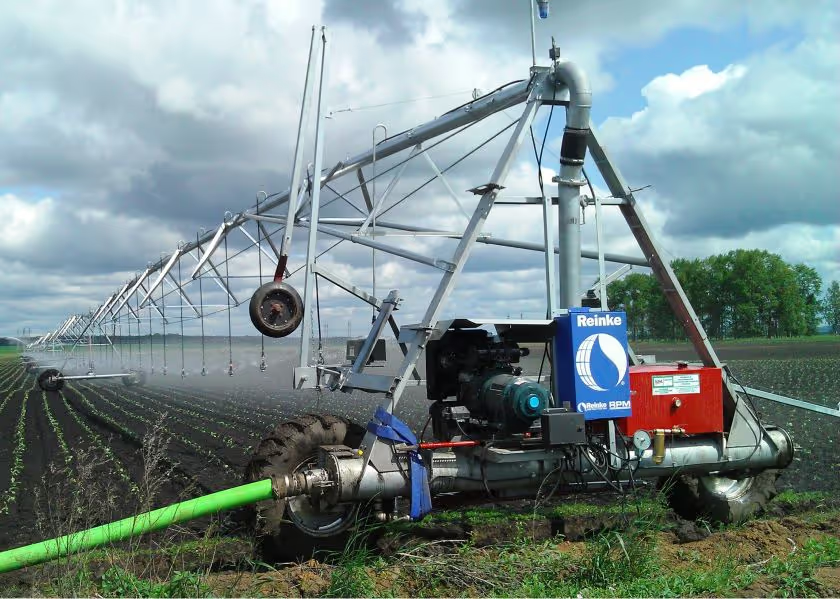




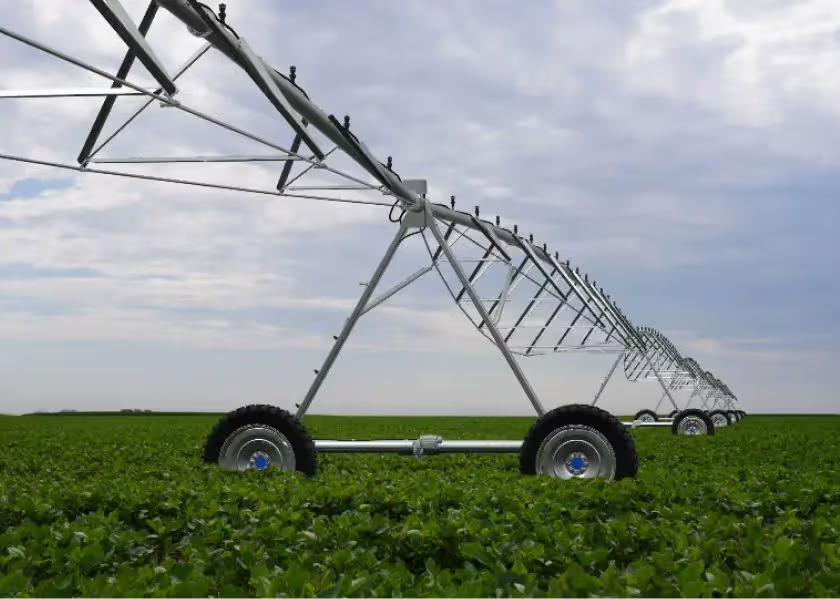
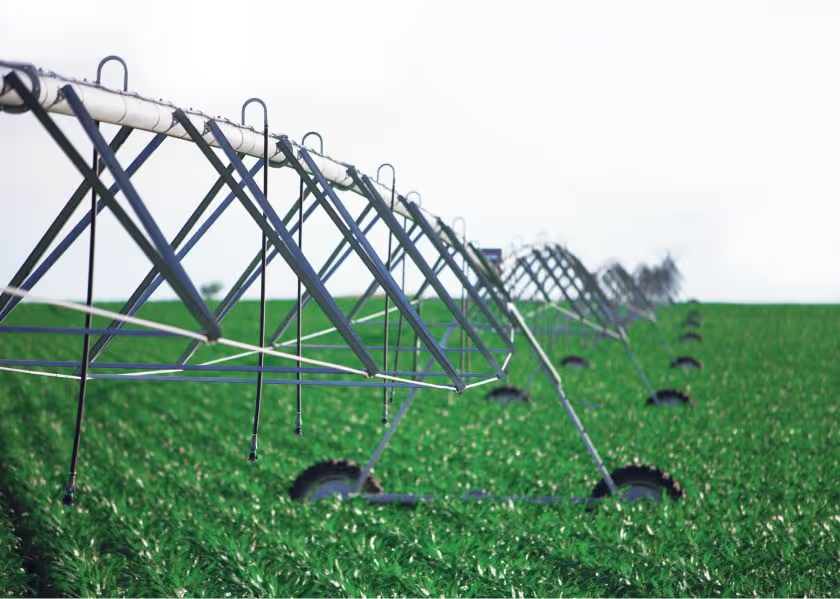
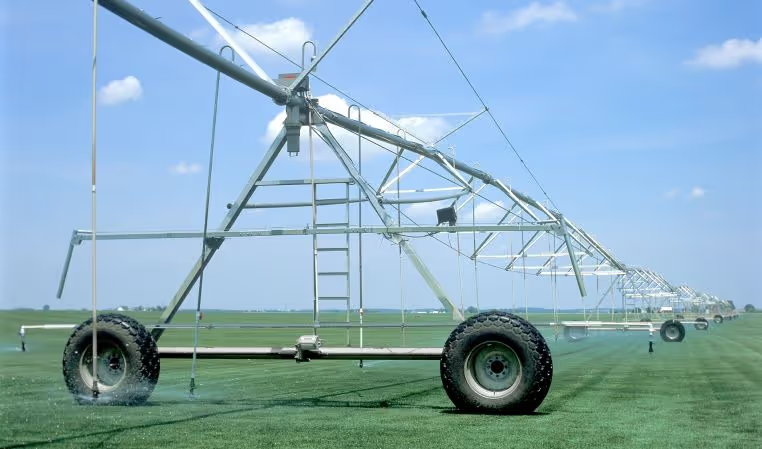

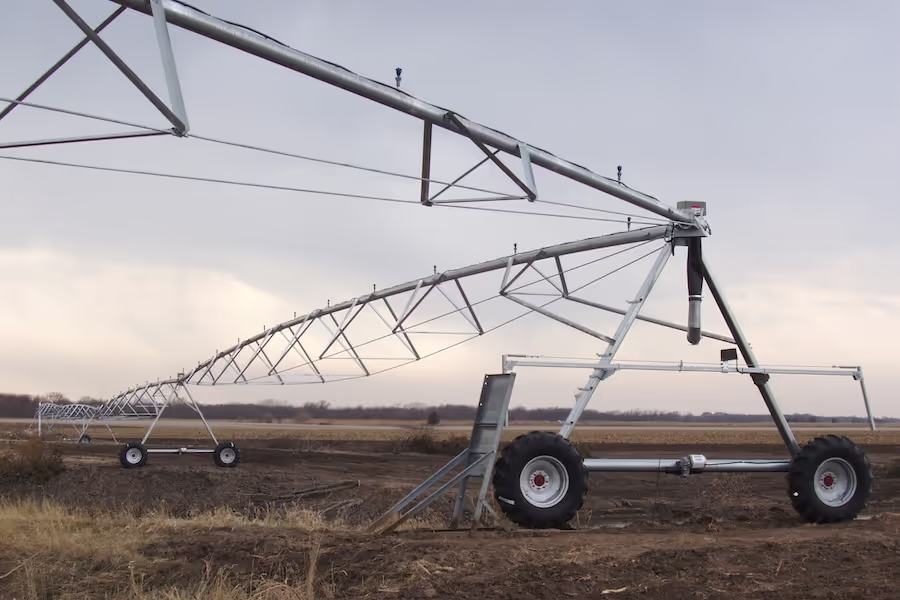
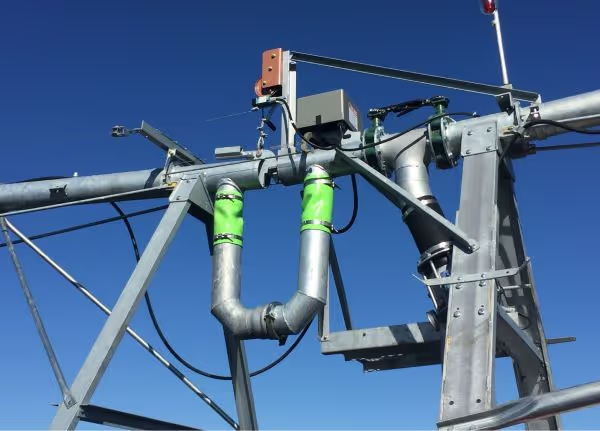



DESHLER, Neb. – Oct. 29, 2026 - In rural areas, it’s the sound of summer. The rhythmic ‘tic, tic, tic’ followed by the splash of water on crops in the field. The slowly turning wheels, moving gently across the soil push the sound further away. There’s no doubt, this is a center pivot doing its job to irrigate a crop.
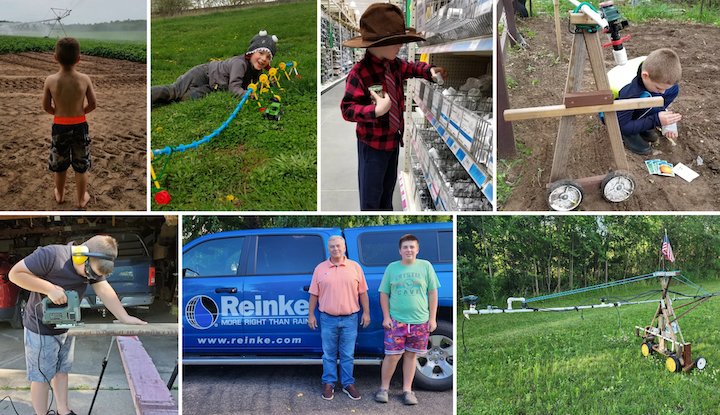
To a young boy in Wisconsin, the sound and sight of the synchronized movement of a pivot was fascinating.
Cut to ten years later. You once again hear the ‘tic, tic, tic’ and the splash of water. The tone of the motor is different, but its wheels roll slowly over grass in a familiar circular path.
At first glance, it looks like a miniature version of the center pivot irrigation systems that dot farm fields across the countryside. But a closer look reveals something remarkable: this pivot wasn’t purchased from a manufacturer. It was built by a teenager using salvaged parts, determination and an endless fascination with how irrigation systems work.
Most teenagers spend their free time scrolling through social media or playing video games. Not Ashton Petersen. The 15-year-old spends his extra time studying the inner workings of irrigation drives, welding scrap metal and figuring out how to make water move down the line like the Reinke Electrogators near his home near Wisconsin Dells.
A passion for pivots at an early age
Growing up, Ashton was captivated by the irrigation systems he saw in the neighboring fields. While others might have glanced at them and moved on, he could sit for hours watching sprinklers rotate, listening to motors hum and observing how each tower moved in perfect synchronization.
“I was mesmerized by the amount of water they put down and the way everything moved together,” Ashton says. “I was amazed with how everything worked together on pivots.”
Family drives often turned into opportunities to look at pivots. Along with his interest in trains, pivots became a source of endless curiosity. He wanted to understand not just what they did, but how they worked.
Ashton’s family took trips to see pivots on display and meeting people who build them each day. Ruth remembers how much they enjoyed talking to the team at Roberts Irrigation in Plover, followed by a visit with Vern Hinnenkamp, the former north central territory manager for Reinke.
“Ashton is a pretty amazing kid,” Vern said. “His curiosity about how machines work and how he could replicate those results is remarkable. You can’t help but be inspired by that kind of inventive personality.”
Ruth recalls Vern giving Ashton product brochures and encouraging him to ask questions. His curiosity soon evolved into small models.
As a child, Ashton built a simple pivot from popsicle sticks and drinking straws. Later came versions made from PVC pipe and other materials he could find around his family’s place. Each project taught him something new about movement, balance and mechanics.
Rather than purchasing a kit or following a set of instructions, Ashton designed and engineered the system himself. His backyard became a workshop where discarded materials were transformed into functioning machinery.
Old mower parts, garage shelving, scrap metal and a satellite dish have all found new life in his projects.
His mother has grown accustomed to finding household items partially dismantled as he investigates how they work.
“When our robot vacuum quit working, I asked Ashton to throw it away,” Ruth said. “A few days later, I found it in his room in pieces. He couldn’t repair it, so he’d learned how it operated and taken it completely apart to use the parts to build something else. Almost everything was repurposed.”
Much of what Ashton has learned comes through experimentation, observation, and countless hours of research. Online do-it-yourself repair videos provide inspiration, but the real education happens through trial and error.
He jokingly refers to his approach as “Red Green” inventing, a nod to the television character from The Red Green Show – known for solving problems with creativity and whatever materials happened to be available.
Building a pivot is far from easy
Ashton remembers gears that slipped, parts broke, chain drives that failed and components that required multiple redesigns before they worked properly. More than once, Ashton had to start over and rethink an entire section of the machine. Yet, each setback became another lesson.
He taught himself welding techniques to create angled pipe structures. He developed moving towers and experimented with timers, controls, and drive systems until everything worked together. Slowly, the project evolved from an idea into a functioning machine.
“Eventually, he set his sights on something much more ambitious,” Ruth said. “It was amazing to watch him building a self-propelled pivot that actually worked.”
Today, Ashton’s homemade pivot includes features that mirror those found on commercial irrigation systems. It incorporates percent timer controls, end-gun shutoffs, towable towers, solar-powered components, and automatic shutoff systems. The movement timing has been carefully calibrated to mimic the operation of full-sized pivots used by farmers.
The result is both impressive and surprising—a backyard-built machine that behaves remarkably like its commercial counterparts.
But Ashton’s talents extend beyond irrigation. He enjoys restoring trains, custom painting locomotives, repairing televisions, fixing snow globes, and rebuilding broken equipment. Whether it’s mechanical, electrical, or simply worn out, he enjoys the challenge of bringing it back to life.
At his core, Ashton is a problem solver. Part inventor, part mechanic, and part artist, he approaches every project with curiosity and persistence. He sees possibilities and opportunities where others see obstacles and scrap.
His future plans include building a garden pivot tall enough to irrigate sweet corn and is designing a potato harvester. Career possibilities range from irrigation and welding to railroad work, electrical trades, or engineering. For now, he’s still exploring where his talents might lead.
As the sun begins to set, Ashton stands beside his pivot, listening carefully as it moves across the yard. He watches the wheels turn, checks the alignment, and makes small adjustments when needed.
It’s a scene that reflects something larger than one teenager’s hobby. It speaks to the tradition of rural ingenuity, hands-on learning, and the kind of innovation that often begins far from classrooms or corporate research labs.
Long before he knows exactly what career he’ll pursue, Ashton already understands something important: machines aren’t just built in factories. Sometimes they begin in backyards, scrap piles, and the imagination of someone determined enough to make them move.
Beyond Irrigation Podcast Episode 5
Jake and Sabreana chat with Ashton on the Podcast Beyond Irrigation. The Wisconsin teenager is an innovator fascinated by how things work. Check it out: reinke.com/podcast/ashton-petersen-teenage-innovator
###
About Reinke Manufacturing: With hundreds of dealers in more than 40 countries, Reinke Manufacturing is the world’s largest privately held manufacturer of center pivot and lateral move irrigation systems. Family-owned since 1954 and headquartered in Deshler, Neb., Reinke develops products and technology designed to increase agricultural production while providing labor savings and environmental efficiencies. Reinke is a continued leader in industry advancements, being the first to incorporate GPS, satellite-based communications, and touchscreen panel capabilities into mechanized irrigation system management. For more information on Reinke or to locate a dealership, visit Reinke.com or call 402-365-7251.